

Stormwater management system: Prevent flooding and network overflows
How continuous monitoring helps overcome challenges

Continuous monitoring for safe, compliant and efficient network operation
Sewer systems or channel networks safely transport stormwater, municipal and industrial wastewater to the treatment plant. During heavy rainfall, stormwater retention basins temporarily store untreated wastewater when the plant’s maximum inlet capacity is reached, helping to prevent sewer overflows and flooding. To ensure compliance with legal requirements and efficient network operation, many plants use measurement and monitoring technologies to continuously monitor basin filling, water levels, discharge and overflow volumes.
重要な事実
25 mm of rain
can generate more than 250 m³ of stormwater on just one hectare of land, making reliable monitoring essential to prevent flooding and sewer overflows.
Protection in sewer networks and stormwater basins

.jpg)


Sewer network with stormwater basin for flow balancing and overflow protection
.jpg)
Control of channel networks and stormwater basins help wastewater treatment plants manage wet-weather flows, prevent overflows and optimize transport


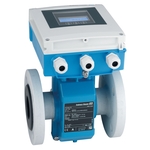
Direct inlet flow measurement with electromagnetic flowmeters Promag W 400
Reliable monitoring in sewer networks
Sewer networks rely on flow and level monitoring to measure wastewater volumes and keep wastewater treatment plants operating within their designed hydraulic capacity. Real-time monitoring provides early warning of increased hydraulic loads during heavy rainfall, helping prevent overflows and treatment disruptions. Combined with pump control across different sewer segments, flow and level measurement supports efficient sewer network management and reliable wastewater treatment.
For direct flow measurement, electromagnetic flowmeters such as Promag W 400 and Promag W 10 provide reliable performance in wastewater

Monitoring an open channel with FlexView FMA90 and Micropilot FMR20B
Continuous level monitoring for sewer systems
Level measurement plays a key role by providing the data needed to correlate water levels with flow rates in channels and sewer systems. Continuous monitoring enables the early detection of clogged pipes, rising water levels and potential overflows into public waterways. This helps operators take corrective action before environmental or operational issues occur. Reliable level data also supports more efficient network control and planning.
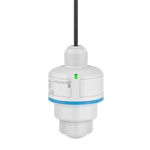
- For challenging sewer environments with humidity or gas layers, radar instruments such as the Micropilot FMR20B combined with control unit FlexView FMA90 offer dependable performance
- Use battery operated Micropilot FWR30 for remote monitoring
- Netilion or SupplyCare enable centralized visualization and analysis of measurement data across the system

Continuous basin monitoring using radar sensor FMR20B combined with control unit FlexView FMA90
Stormwater basin monitoring to prevent overflows
Effective stormwater basin monitoring combines rainfall, level and flow data to protect wastewater infrastructure and waterways during heavy rainfall. Level measurement shows available storage capacity and indicates when untreated wastewater may be discharged. Flow measurement quantifies overflow volumes, while a recorder documents event frequency and discharged volumes for compliance and reporting. Remote access enables centralized monitoring, faster response and improved long-term network planning.
- Continuous basin level monitoring with radar sensor Micropilot FMR10B, Micropilot FMR20B or Micropilot FMR30B to detect rising water levels early. Process indicator RIA15 provides immediate transparency on basin status to prevent overflows.
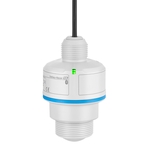
- Combine radar sensors Micropilot FMR20B or Micropilot FMR30B with control unit FlexView FMA90 to monitor incoming and outgoing flows, verify retention capacity and better understand basin behavior during heavy rainfall events.
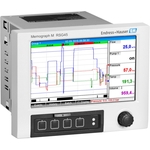
- Data manager Memograph RSG45 records level, flow, alarms and rainfall-related process data. Historical event records help analyze storm events and overflows to meet regulatory compliance.

Hydrostatic level measurement with Waterpilot FMX21 in a pump station
Monitoring of sewer pump station
Level measurement in pump stations is critical for controlling pump operations, helping prevent uncontrolled backflow of untreated wastewater into the environment, streets and households. Continuous level, pressure and flow monitoring provides valuable insight into pump station performance to detect failures early and minimize costly downtime. In wastewater applications, corrosive H₂S gases, foam, grease and debris can create challenging measurement conditions, making robust instrumentation essential. Depending on the application, hydrostatic, radar or ultrasonic technologies can be used to deliver reliable level measurement.
- Hydrostatic measurement with Waterpilot FMX21 offers durable, flush-mounted design that resists buildup and abrasion
- Non-contact radar instrumentation like Micropilot FMR10B, Micropilot FMR20B or Micropilot FMR30B are unaffected by foam or condensation
- Combined with controllers and displays such as the FlexView FMA90, these systems support efficient pump control and balanced pump usage



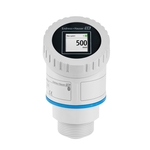
Overflow event documentation for compliance and post-event analysis
During wet-weather events, operators often need documented evidence of basin performance, overflow duration and discharged volume. Continuous recording of level, flow and alarm data enables accurate event reconstruction and provides the traceability required for regulatory reporting and audits. Historical records also support the investigation of overflow incidents, helping plants identify recurring issues, evaluate network performance and implement measures to reduce environmental impact during future storm events.


