Compact thermometers
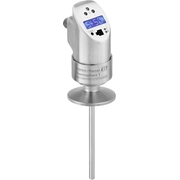
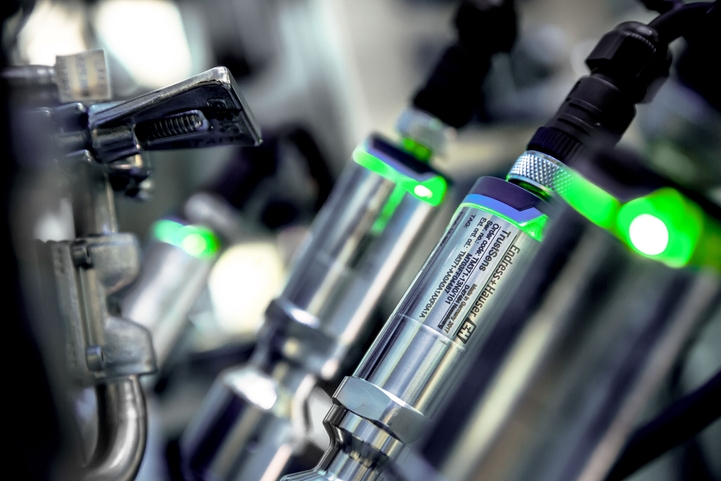
Compact thermometers with integrated transmitter: universal and fit-for-purpose instruments for industrial and hygienic applications
F
L
E
X
Simple products
Easy to select, install and operate
Technical excellence
Simplicity
Standard products
Reliable, robust and low-maintenance
Technical excellence
Simplicity
High-end products
Highly functional and convenient
Technical excellence
Simplicity
Specialized products
Designed for demanding applications
Technical excellence
Simplicity
FLEX selections
Technical excellence
Simplicity
Fundamental selection
Meet your basic measurement needs
Technical excellence
Simplicity
Lean selection
Handle your core processes easily
Technical excellence
Simplicity
Extended selection
Optimize your processes with innovative technologies
Technical excellence
Simplicity
Xpert selection
Master your most challenging applications
Technical excellence
Simplicity
Compare
Accuracy
class A acc. to IEC 60751
Response time
t50 = 1 s
Max. process pressure (static)
at 20 °C: 50 bar (725 psi)
Operating temperature range
PT 100:
Max. immersion length on request
up to 600,00 mm (23,62'')
Response time
t50 = 2.5 s
Max. process pressure (static)
at 20 °C: 40 bar (580 psi)
Operating temperature range
Pt100:
Max. immersion length on request
up to 900.00 mm (35.4'')
Accuracy
class A acc. to IEC 60751
Response time
t50 = 1 s
Max. process pressure (static)
at 20 °C: 100 bar (1.450 psi)
Operating temperature range
PT 100:
Max. immersion length on request
up to 600,00 mm (23,62'')
Accuracy
class A acc. to IEC 60751
Response time
t50 = 1 s
Max. process pressure (static)
at 20 °C: 100 bar (1.450 psi)
Operating temperature range
PT 100:
Max. immersion length on request
up to 600,00 mm (23,62'')
Accuracy
-50...75 °C: <0,5 K
Operating temperature range
-50...150 °C (-58...302 °F)
Accuracy
-50...75 °C: <0,5 K
Operating temperature range
-50...150 °C (-58...302 °F)
Compact thermometers
Our product finder helps you to search for suitable measuring devices, software or system components via product characteristics. Applicator leads you through an individual product selection via application parameters.
About compact thermometers
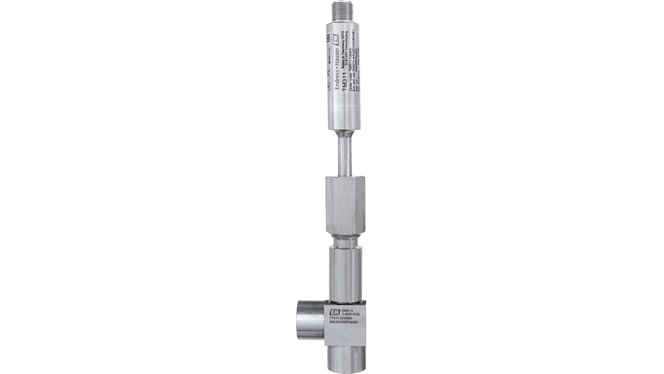
Compact thermometers combine all components into a single, non-dismantable assembly. With their small and lightweight design, cost efficiency, optimal space utilization, reliable operation, easy installation and commissioning, they perfectly meet the requirements of modern process instrumentation. Within our streamlined portfolio, we offer maximum versatility for industrial or hygienic use - from different communication signals to a wide range of process connections.
iTHERM CompactLine
The iTHERM CompactLine family has been thoughtfully designed to avoid unnecessary complexity and achieve a balanced price/performance ratio. Ready to use and versatile, these instruments are designed for a wide range of applications in the life sciences, food & beverage, and general process industries. The inclusion of high-quality measurement technology like fastest responding sensors and sensor-transmitter-matching secures highest response times and accuracy.
Portfolio description
Our streamlined portfolio of small temperature probes provides:
Different process connections – threaded or hygienic Variety of RTD sensor designs – basic or high-performing Thermometers with thermowell – easy and safe replacement / recalibration Thermometers without thermowell – direct medium contact: fastest response times and highest accuracy Thermometers with or without transmitter Thermometers with or without display Communication signals – 4 to 20 mA, IO-Link Hygienic thermowells – including tee and elbow thermowells
©Endress+Hauser
©Endress+Hauser
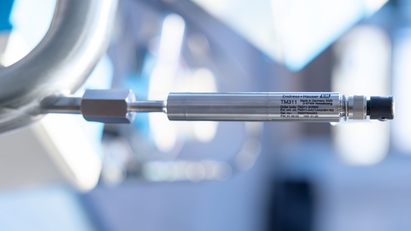
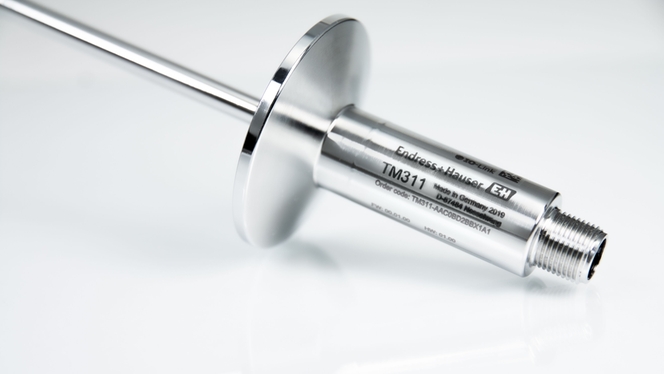
Compact, accurate and versatile – the iTHERM CompactLine TM311
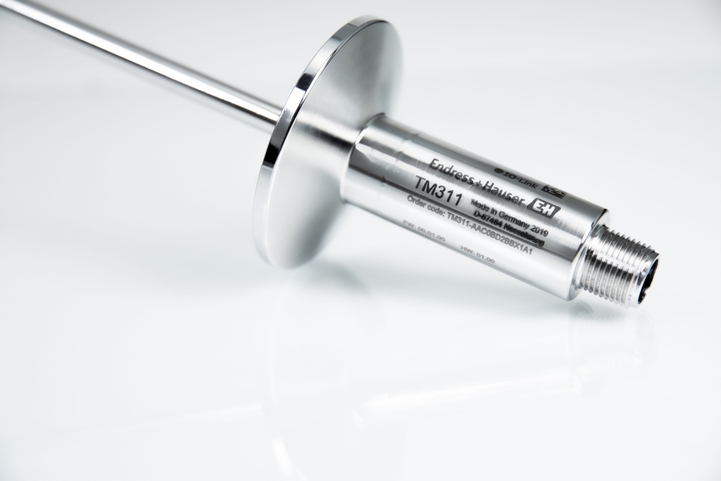
Leak-tight and easily removable – compact thermometer with clamp connection
Explained: Temperature measurement with Resistance Temperature Detectors (RTD)
Leak-tight and easily removable – compact thermometer with clamp connection
Explained: Temperature measurement with Resistance Temperature Detectors (RTD)
iTHERM TrustSens technology
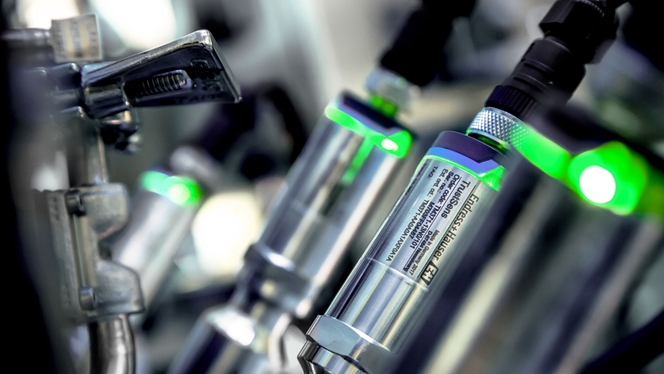
Endress+Hauser has developed the world's first self-calibrating temperature sensor technology specifically designed for hygienic applications that require strict compliance to FDA and GMP regulations. The sensor unit combines a standard Pt100 RTD with a highly accurate fixed-point reference element that makes use of the Curie temperature effect to generate a reliable calibration signal. The award-winning technology helps to minimize risks and measurement uncertainties in critical processes.
©Endress+Hauser
©Endress+Hauser
iTHERM TrustSens TM371 / TM372 with self-calibrating Pt100 sensor
The right fit for critical hygienic applications in life sciences and food & beverage
Self-calibration explained: Taking advantage of the Curie-temperature
iTHERM TrustSens TM371 / TM372 with self-calibrating Pt100 sensor
The right fit for critical hygienic applications in life sciences and food & beverage
Self-calibration explained: Taking advantage of the Curie-temperature
Tee and elbow thermowells
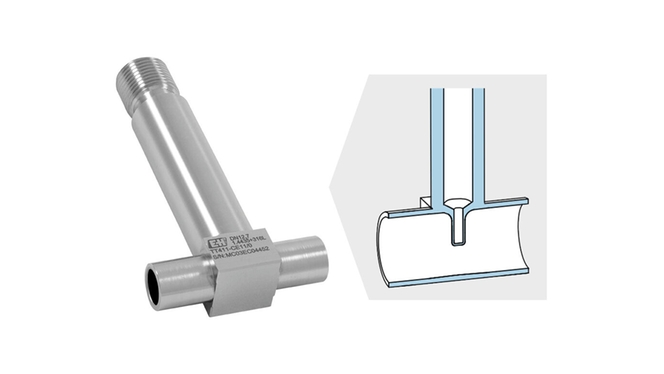
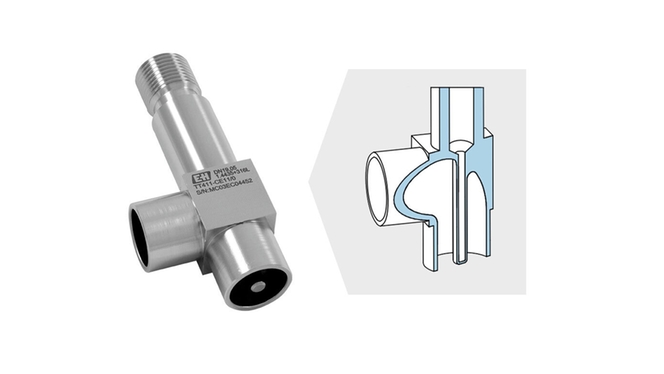
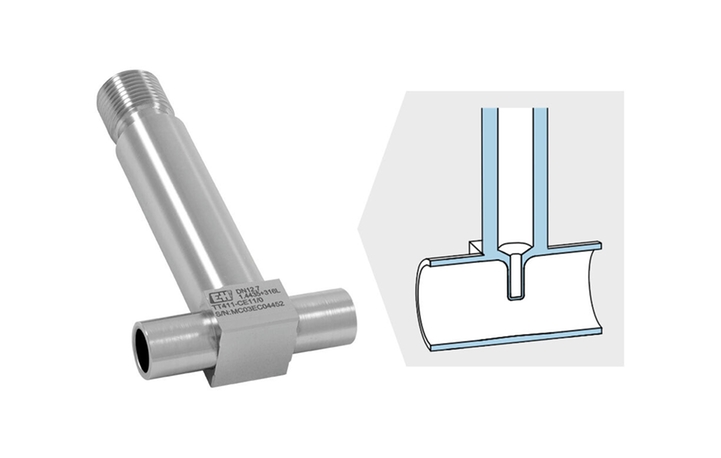
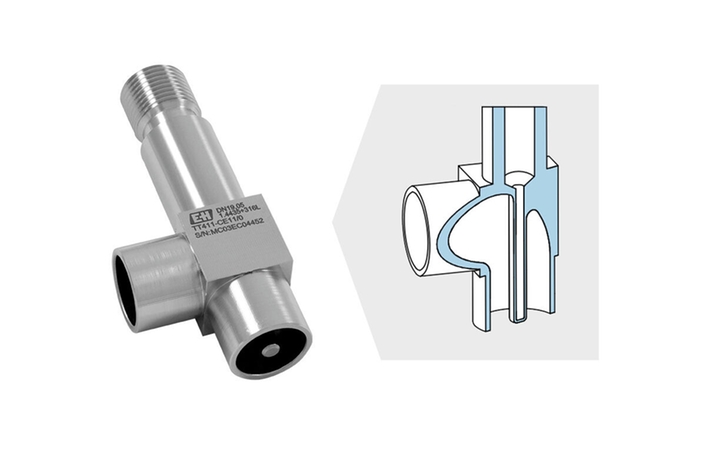
Our Endress+Hauser hygienic thermowells are designed without welds or dead legs , making them easy to clean and ideal for hygienic and aseptic applications. They get welded into the process piping, are non-dismantable and are milled from a single piece of stainless steel . Even with very short immersion lengths, these thermowells are ideal for the use in hygienic or aseptic pipes, vessels or tanks.
©Endress+Hauser
©Endress+Hauser
©Endress+Hauser
Tee thermowell Straight pipe segment joined to a thermowell, with the thermowell projecting into the pipe segment at a 90° angle.
Elbow thermowell Pipe elbow and thermowell, with the thermowell projecting straight into one side of the pipe bend.
Tee thermowell Straight pipe segment joined to a thermowell, with the thermowell projecting into the pipe segment at a 90° angle.
Elbow thermowell Pipe elbow and thermowell, with the thermowell projecting straight into one side of the pipe bend.
Benefits
Small, compact, all stainless steel design Cost effective Extremely short response times Highly accurate even with short insertion lengths Simple and fast commissioning Streamlined portfolio: reduction of stocked items Best-in-class hygienic design Suitable for all applications
Related content
News, events and more...
Related topics
Technology, construction and benefits of resistance temperature detecors (RTDs) in temperature measurement.
Choosing a compact thermometer
What is a compact thermometer?
A compact thermometer combines the temperature sensor and the measurement electronics in a small, ready-to-use assembly. Unlike a modular thermometer, its individual components are generally not designed to be replaced separately. Compact thermometers are particularly suitable when space, simple installation and cost efficiency are important.
Where are compact thermometers typically used?
Compact thermometers are used for temperature measurement and monitoring in tanks, pipes, skids, machines and auxiliary processes, especially with limited space. Typical applications range from hygienic applications in the food, beverage and life sciences industries to general industrial equipment, compressors, utilities, HVAC systems, data centers and marine applications.
When should I use a compact thermometer instead of a modular thermometer?
A compact thermometer is a good choice for standard measuring points where a small design, simple installation and an attractive price-performance ratio are priorities. A modular thermometer is generally preferable when individual components need to be replaced , additional housing or display options are required, or the measuring point involves particularly demanding process conditions .
How do I choose the right compact thermometer for my application?
Choose a compact thermometer based on the measurement task and the process conditions at the measuring point. Then consider the required process connection, hygienic requirements, process connection, installation design and required output signal. Continuous measurement can be provided through a direct Pt100 signal, 4–20 mA, HART or IO-Link communication, depending on the device.
Which Endress+Hauser compact thermometer do I need?
Choose between dedicated models for industrial applications with threaded or compression-fitting connections and hygienic applications with hygienic process connections and corresponding approvals.
TMR31 (metric) : Industrial compact thermometer with 4–20 mA outputTMR35 (metric): Hygienic compact thermometer with 4–20 mA outputTM311 (metric/imperial) : Industrial or hygienic compact thermometer with iTHERM TipSens and 4–20 mA or IO-LinkTTR31 (metric): Industrial temperature switch with PNP switch outputsTTR35 (metric) : Hygienic temperature switch with PNP switch outputsTM371 (metric) / TM372 (imperial) : Hygienic self-calibrating thermometer with 4–20 mA/HART
Do I need continuous temperature measurement or a switching output?
Continuous temperature measurement is chosen when the actual measured temperature value needs to be transmitted to a control or monitoring system.
A temperature switch is used to generate a switching signal whenever the process temperature exceeds or falls below a predefined setpoint. This signal can then be used, for example, to switch an actuator on or off.
Endress+Hauser offers compact devices for continuous temperature measurement only (TMR31 ) or models with both options (e.g. iTHERM CompactLine TM311 , Thermophant TTR3x).
Can compact thermometers be used in both industrial and hygienic applications?
Yes. Compact thermometers are available for both industrial and sanitary applications.
Hygienic variants feature process connections and surface finishes optimized for cleanability and compliance with the requirements of the food, beverage, life sciences and pharmaceutical industries. They meet internationally recognized hygienic design standards and GMP-related requirements, including 3-A, EHEDG, ASME BPE, cGMP and Food Contact Materials (FCM).
When is a self-calibrating compact thermometer useful?
A self-calibrating compact thermometer is particularly useful for critical measuring points with high requirements for product quality, process safety, calibration documentation or regulatory compliance. iTHERM TrustSens uses an integrated physical reference point for automated in-line self-calibration, helping users detect measurement deviations and reduce manual calibration effort.
This makes self-calibrating thermometers such as iTHERM TrustSens TM371 (metric) and TM372 (imperial) particularly relevant for critical control points (CCP) in sanitary and regulated applications in the food, beverage and life sciences industries.
Which output signal should I choose for a compact thermometer?
Choose the output signal according to the available control-system input, but also based on the required level of device information, configuration and diagnostics.
A direct Pt100 signal is suitable when the control system provides an appropriate RTD input. A 4–20 mA signal offers standardized analog transmission over longer distances, while IO-Link supports digital communication, device identification, parameterization and diagnostic information. HART is available for compact thermometers designed for advanced diagnostics, calibration or asset-management requirements.
When should I use IO-Link instead of 4–20 mA?
Use IO-Link when digital parameterization, additional device information, diagnostics or easier device replacement are required. Use 4–20 mA when a robust, widely established analog signal is sufficient.
iTHERM CompactLine TM311 offers both IO-Link or 4–20 mA (2-wire) output in one device. The active output depends on the electrical connection. Parameterization is possible through IO-Link or with the FieldPort SFP20 and the DeviceCare configuration software.
Show more
Show less
Installation, performance and maintenance
Should I install a compact thermometer directly in the process or in a thermowell?
Direct contact generally provides a fast response time because the sensor is directly exposed to the process. A thermowell allows the thermometer to be removed for inspection, replacement or calibration without opening or draining the process.
The best option depends on the required response time, process pressure, mechanical loads, hygienic requirements and maintenance strategy.
What is the difference between an RTD and a thermocouple, and which sensor is used in compact thermometers?
Resistance temperature detectors (RTDs) determine temperature from changes in the electrical resistance of the sensor material. A Pt100 sensor is a widely used RTD with a nominal resistance of 100 ohms at 0 °C. RTDs offer high accuracy, repeatability and long-term stability, making them the preferred choice for many industrial and hygienic temperature measurements. That is the reason why Endress+Hauser compact thermometers use Pt100 sensor technology.Thermocouples (TCs) generate a small voltage based on the temperature difference between the measuring and reference junctions. They are commonly selected for very high temperatures, rapid temperature changes and particularly demanding environments.All Endress+Hauser compact thermometers use Pt100 RTD sensor technology. If a thermocouple is required for higher temperature ranges or particularly harsh applications, a modular thermometer or cable sensor may be more suitable.
What affects the response time of a compact thermometer?
Response time is influenced by the sensor design, insert diameter, process medium and flow conditions . Optimized sensor technologies (e.g. iTHERM TipSens) and thermowells (e.g. with reduced tips) can improve heat transfer and shorten the response time.
Within iTHERM CompactLine TM311 , the iTHERM TipSens sensor version positions the Pt100 element directly at the sensor tip to achieve particularly fast response times of t90 = 1.5 seconds.
How accurate are compact thermometers, and what do Pt100 tolerance classes mean?
Compact thermometers can achieve an overall measurement accuracy of up to 0.14 °C, depending on the device and configuration.
The accuracy of a Pt100 temperature sensor is specified by tolerance classes according to IEC 60751. These classes define the maximum permissible deviation of the individual sensor characteristic from the standardized Pt100 characteristic. The tolerance is not a fixed value: it increases as the measured temperature moves away from 0 °C.
Class B: ±(0.3 + 0.005 × |t|) °CClass A: ±(0.15 + 0.002 × |t|) °CClass AA: ±(0.1 + 0.0017 × |t|) °CAt 0 °C, the maximum permissible sensor deviation is ±0.3 °C for Class B, ±0.15 °C for Class A and ±0.1 °C for Class AA. However, the tolerance class describes only the Pt100 sensor itself and should not be confused with the overall measurement accuracy of the complete thermometer.
Overall measurement accuracy is influenced by the transmitter electronics, wiring, calibration, immersion length, heat dissipation and installation conditions.
Are compact thermometers suitable for washdown and hygienic cleaning?
Yes. Compact thermometers are available with high degrees of ingress protection for demanding environments, meaning they can withstand cleaning with a high-pressure water jet. They also meet the requirements for hygienic design and material compatibility necessary for cleaning cycles in the process, such as CIP and SIP cleaning.
The specifications and approvals of the selected thermometer should be checked against the conditions of the individual cleaning process.
What happens if a compact thermometer detects a sensor fault?
Depending on the electronics and output type, a compact thermometer can signal faults such as a sensor break or short circuit through a defined diagnostic or output state. For devices with a NAMUR NE43-compliant 4–20 mA output, the current moves outside the normal measuring range. This allows the control system to distinguish a device fault from a valid temperature value. Devices with digital communication typically follow the diagnostic standards specified in Namur NE107, and digital communication such as IO-Link will offer diagnostic information.
Can individual components of a compact thermometer be replaced?
Generally, no. Compact thermometers are typically designed as non-dismantlable assemblies. The sensor, housing and electronics therefore cannot be replaced independently. However, many compact thermometers are available with separable thermowells.
If replacement of single components, an exchangeable insert, a configurable head transmitter or additional housing options are required, a modular thermometer may be the better choice.
Show more
Show less
We value your privacy
We use cookies to enhance your browsing experience, collect statistics to optimize site functionality, and deliver tailored advertisements or content.
By selecting "Accept all", you consent to our use of cookies.cookie policy .
Customize
Accept only essential
Accept all