化学成分の光学式分析
固体、液体、スラリー、気体用の包括的なラボおよびプロセス用光学式分析システム
F
L
E
X
標準的製品
高い信頼性と堅牢性、容易なメンテナンス
技術的卓越性
シンプルさ
特殊仕様の製品
要件の厳しいアプリケーション向けに設計
技術的卓越性
シンプルさ
FLEX セレクション
技術的卓越性
シンプルさ
Fundamental セレクション
基本的な測定要件に対応
技術的卓越性
シンプルさ
技術的卓越性
シンプルさ
Extended セレクション
革新的な技術でプロセスを最適化
技術的卓越性
シンプルさ
Xpert セレクション
最も困難なアプリケーションにも対応
技術的卓越性
シンプルさ
New
比較する
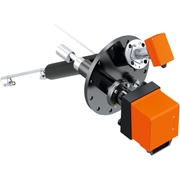
Measured variables
Gas components, calorific value, density, Wobbe index, molar mass, compressibility
Measuring medium
Natural gas, biogas, air, H2, O2, N2
Analysis time
≥45 seconds
Measured variables
NO, NO2, NH3, SO2
Process temperature
≤ +550 °C
Ambient temperature range
–20 °C ... +55 °C
Hazardous area approvals
IECEx: Ex pzc op is [ia] IIC T3 Gc
被分析および測定範囲
H2S(硫化水素):
危険場所で使用するための認定
ATEX/IECEx/UKEx ゾーン 1
レーザー波長
Starter:785 nm
スペクトル範囲
Starter 785 nm:300~3300 cm-1
Measured variables
Dust concentration (after gravimetric comparison measurement), gas velocity, gas pressure, gas temperature
Process temperature
–20 °C ... +200 °C
Process pressure
–70 hPa ... 10 hPa
Supported products
FLOWSIC200, GM32, MCS100FT, MCS200HW, MCS300P, MERCEM300Z, VICOTEC320, VICOTEC450, VISIC100SF, VISIC50SF, DUSTHUNTER SB100, DUSTHUNTER SP100, FLOWSIC100, MARSIC300, VICOTEC410, GMS800 (DEFOR + OXOR)
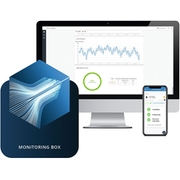
Data output
Monitoring Box frontend
Hosting
Off-premise: https://monitoringbox.endress.com
Contract type
SaaS (Software as a Service)
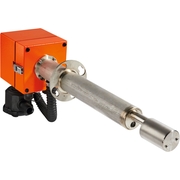
Process temperature
-40 °C ... +220 °C
Measuring range
Scattered light intensity: 0 ... 7.5 mg/m3 / 0 ... 3,000 mg/m3
Conformities
TÜV type test
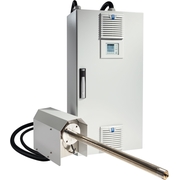
Measured variables
CO2, SO2, NO, NO2, CO, NH3, H2O, CH4
Ambient temperature range
0 °C ... +50 °C
Conformities
MARPOL Annex VI and NTC 2008 – MEPC.177(58)
Measured variables
CH4, CO, CO2, Corg, HCl, H2O, NH3, NO, NO2, N2O, O2, SO2
Ambient temperature range
+5 °C ... +50 °C
Process temperature
≤ +550 °C
Measuring range
More than 60 measuring components available (depending on concentration and sample gas composition)
機器の選択やサイズの特定にお困りですか?
測定タスクや用途に最適な製品の選定・設定をサポートします。
固体、液体、スラリー、粒子、ガスの光学式分析について
Endress+Hauserは、ラボ、プロセス、排出モニタリングのための原子・分子分析ツールの包括的なポートフォリオを提供し、お客様の未来に向けて大きな投資を行っています。
プロセスの透明性 :光学式分析によるデータがプロセスを可視化し、より的確な意思決定をサポートリアルタイム測定 :数秒から数分で測定可能、ダウンタイムを最小化し、産業プロセスの運用コストを削減品質と信頼性 :光学式分析システムにより、重要な産業プロセスを最適化し、製品品質を確実に監視非侵襲・ハンズフリー測定 :インライン光学式分析で、サンプル準備や取り扱い不要の安全・効率的な測定を実現高い設備稼働率 :操作・保守が容易な光学式システムの導入で、高い稼働率を確保コンプライアンス対応 :排出量を的確に低減するため、ガス濃度の信頼性ある分析・監視が不可欠
光学式分析とは?
光学式分析は、光と物質の相互作用を利用して化学組成を特定し、定量化する技術です。紫外線、可視光線、赤外線といった電磁波が、物質に吸収・発光・散乱・透過される際の挙動を解析します。
電磁放射とは?
電磁スペクトルは、電磁放射のすべての周波数または波長の範囲を表します。電磁放射は波長によって分類され、電波、マイクロ波、赤外線、可視光線、紫外線、X線、ガンマ線に分けられます。電磁放射はエネルギー、波長、または周波数で表すことができます。その挙動は波長によって異なります。電磁放射は波の性質と粒子の性質の両方を持っています。静止した電荷は電場を生じ、移動する電荷は電場と磁場の両方を生成します。加速された電荷は電磁放射を放出します。
電磁放射は物質とどのように相互作用するのか?
電磁放射と物質の相互作用には、放射の吸収、発光、散乱が含まれます。電磁放射と物質の相互作用の大きさは、分子の双極子モーメントの大きさに依存します。光のスペクトルの異なる領域は、さまざまな分子や原子の特性を理解するために利用されます。
分光法とは?
分光法は、電磁放射と物質の相互作用を研究する技術で、放射の吸収、発光、散乱を含みます。この手法は、原子や分子の組成や構造を理解するための不可欠なツールとして利用されてきました。
化学分析における分光法と測定手法とは?
2012年以来、Endress+Hauserは、インラインまたはラボでの光学分析、ガスモニタリング、ラボ自動化技術に積極的に投資してきました。その一環として、SpectraSensors、Kaiser Optical Systems、Analytik Jena、Blue Ocean Nova AGの買収、さらにSICK AGとの戦略的パートナーシップを実現しました。
ラマン分光法 : 散乱レーザー光を解析し、分子振動を検出。化学結合や分子構造の同定に有効。可変波長半導体レーザー吸収分光法 : 特定波長に調整したレーザー光を用いて、ガス濃度を高感度で測定。消光蛍光法(QF: Quenched Fluorescence) 励起分子が発する光を測定し、蛍光強度や減衰の変化を追跡することで酸素などの分析対象を検出。 UV-Vis-NIR分光光度法(紫外・可視・近赤外分光法) 紫外、可視、近赤外領域における反射率、吸光度、透過率を測定。 赤外分光法(IR spectroscopy) 赤外光の吸収を解析し、官能基や分子構造を同定。 原子発光・吸光分光法(Atomic Emission and Absorption Spectroscopy) 原子が発する、または吸収する光を測定し、元素組成を定量。 これらの光学分析技術は、電磁放射と物質の相互作用に基づいており、定性・定量分析の両方において非常に強力なツールです。
What is Raman spectroscopy?
Raman spectroscopy is a powerful molecular spectroscopy technique that analyzes the vibrational modes of compounds and provides molecular fingerprint identification of materials through spectral analysis. It typically uses visible or near-infrared laser light as the source of electromagnetic radiation. The method measures the inelastic scattering of photons, known as Raman scattering, which occurs when light interacts with molecular vibrations. Unlike absorption-based techniques, Raman spectroscopy is based on scattering of light and does not require a defined path length. It is sensitive to changes in the polarizability of the electron cloud during light interaction, making it ideal for measuring symmetric bond vibrations. Like other molecular spectroscopy techniques, Raman spectroscopy is used to identify chemical composition and molecular structure. However, it offers important advantages, including its high specificity and ability to measure in aqueous samples. An aspect of Raman spectroscopy that is advantageous in a process setting is its ability to scale a quantitative analytical model from R&D to manufacturing with minimal scale-specific data.
What is ultraviolet-visible spectroscopy (UV/Vis)?
UV/Vis is an analytical technique that measures the absorption of ultraviolet and visible light by a substance. It operates within the wavelength range of approximately 200–800 nm and is commonly used to determine concentration, chemical structure, and purity of samples. UV/Vis analysis is widely applied in pharmaceuticals, environmental testing, and chemical research for fast, reliable results.
What is near infrared (NIR)?
Near-infrared (NIR) refers to the region of the electromagnetic spectrum with wavelengths ranging from approximately 780 nm to 2500 nm. NIR spectroscopy is widely used in optical analysis to identify chemical compositions, monitor material properties, and perform non-destructive testing. It is especially valuable in industries like hydrocarbon processing, pharmaceuticals, agriculture, and food processing for rapid, accurate analysis without sample preparation.
What is absorption spectroscopy?
Absorption spectroscopy measures the absorption of specific wavelengths of electromagnetic radiation by atoms or molecules in a sample. Absorption occurs due to the selective removal of certain frequencies by matter, revealing valuable information about the sample’s composition and concentration.
What is tunable diode laser absorption spectroscopy (TDLAS)?
TDLAS is a form of infrared spectroscopy that analyzes absorption related to changes in dipole moments of molecules during vibrational transitions. It uses infrared or near-infrared laser light tuned to a gas’s unique absorption lines to measure the concentration of specific analytes with high precision. The technique is governed by the Beer-Lambert Law , which relate the amount of light absorbed to the properties of the absorbing material. By applying Beer-Lambert Law, TDLAS quantifies how much light is absorbed at specific wavelengths, enabling accurate measurement of trace gases.
What is quenched fluorescence (QF)?
QF, also known as fluorescence quenching, is an optical technique that measures how the fluorescence of a molecule is reduced or "quenched” by oxygen. Fluorescence refers to the luminescence of light by an excited molecule almost immediately after it absorbs light. This method typically uses ultraviolet (UV) or visible light as the source of electromagnetic radiation. The technique involves the excitation and emission of light by fluorescent molecules, and the degree of quenching provides valuable information about the presence or concentration of specific analytes, such as oxygen.
さらに表示
一部を表示
Quality & Compliance
プラントの安全性を高め、製品の品質を確保し、運用を最適化します。ラマン分光法により、ラボからプロセスまで、サンプルの組成および分子構造をリアルタイムで測定します。
製品
石油・ガス産業におけるガス品質、プロセス制御、およびアセット健全性向上のための信頼性の高いH2 S測定
関連トピックス
プラントの安全性および稼働率を最適化します。波長可変半導体レーザー(TDLAS)は、高速かつ確実にプロセスガスストリーム内の濃度をリアルタイムで測定します。
お客様のプライバシーを尊重します
Endress+Hauser は Cookie を使用して、閲覧エクスペリエンスを向上させ、統計を収集してサイトの機能を最適化し、カスタマイズされた広告やコンテンツを配信します。
「すべて受け入れる」を選択すると、Cookie の使用に同意したことになります。Cookie ポリシー をご覧ください。
カスタマイズ
重要なもののみ受け入れる
すべて受け入れる